
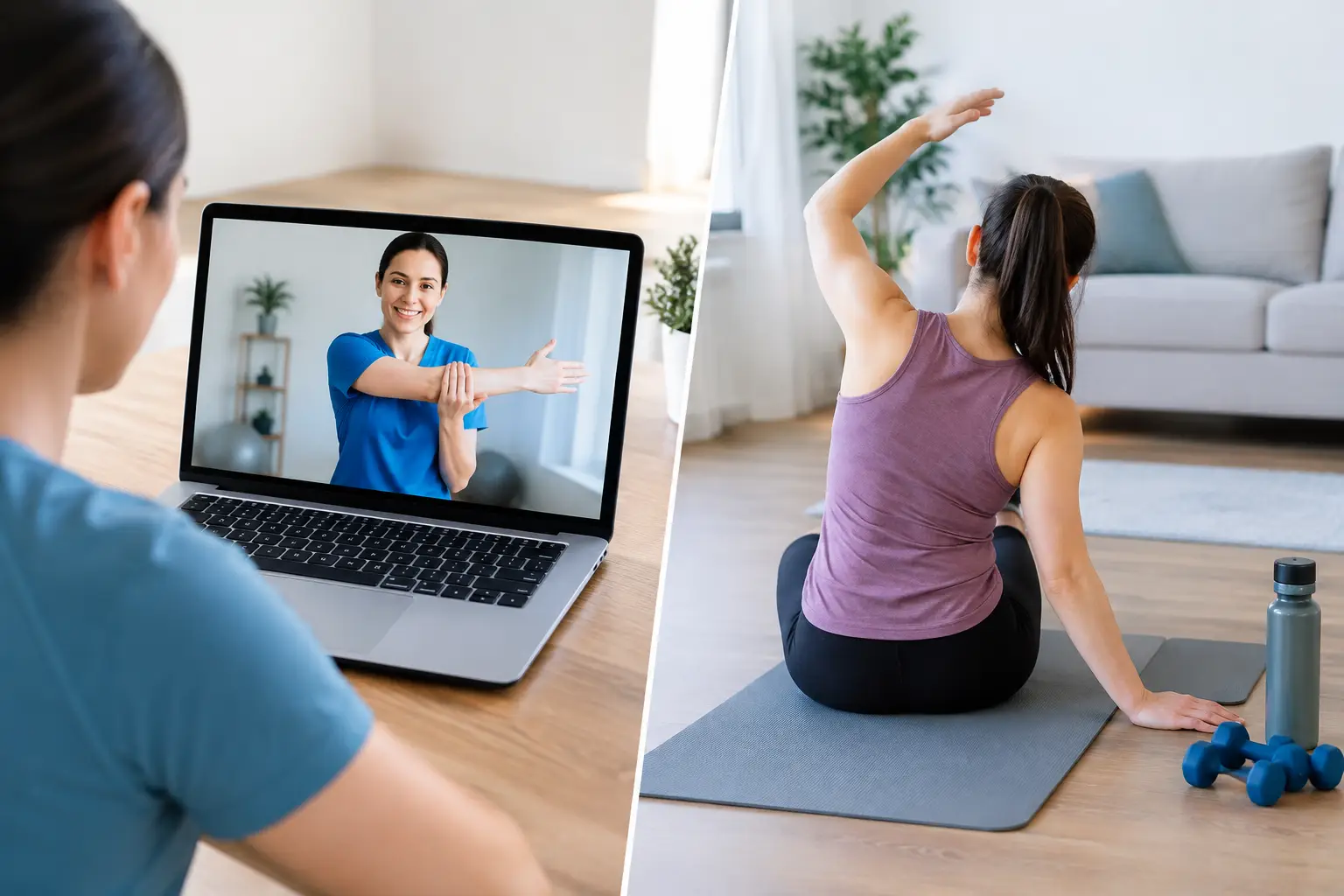
A sore back after a long workday, a knee that still feels unreliable after a twist, or neck pain that returns every time you look down at a screen can leave you asking one practical question: can you manage this yourself? When considering telehealth physiotherapy versus home exercises, the best choice depends on your symptoms, your goals, and whether you need professional guidance to move forward safely.
Home exercises can be a valuable part of recovery. In fact, most successful rehabilitation plans include them. But an exercise list and a personalized physiotherapy plan are not the same thing. Virtual care gives you access to a licensed professional who can assess your movement, adjust your program, and help you understand what your body is telling you without requiring a trip to the clinic.
What Home Exercises Can Do Well
For mild stiffness, general conditioning, or an issue that has already been assessed, home exercises can be an effective way to stay consistent. A regular routine can build strength, maintain mobility, and support the progress made during treatment. It also gives you control over when and where you move.
Simple exercises are often useful when you know the diagnosis, understand the correct form, and have clear instructions on how frequently to perform them. For example, someone with a previously assessed shoulder problem may benefit from continuing prescribed band exercises. A runner returning to activity may use a familiar hip and calf-strengthening routine to maintain capacity between appointments.
The challenge is that pain and movement problems are rarely static. An exercise that helped two weeks ago may be too easy, too difficult, or no longer appropriate. Many people also compensate without realizing it. They may arch their back during a core exercise, shrug through a shoulder movement, or shift their weight away from a painful knee. The movement gets completed, but the intended muscles may not be doing the work.
Where Home Programs Can Fall Short
Online videos and generic exercise sheets cannot see how you move or respond when something feels wrong. They may offer useful education, but they cannot determine whether your pain is coming from the joint, muscle, nerve, tendon, or a combination of factors. They also cannot account for your medical history, work demands, previous injuries, or current fitness level.
This matters because “no pain, no gain” is not a good rule for rehabilitation. Some discomfort during recovery can be normal, particularly when rebuilding strength after an injury. Sharp pain, increasing symptoms, numbness, weakness, swelling, or pain that lingers long after exercise may signal that the program needs to change.
Home exercise plans can also lose momentum. When pain improves, it is easy to stop too soon. When pain does not improve quickly, it is tempting to try more exercises, push harder, or give up altogether. A physiotherapist can provide the progression, accountability, and reassurance that help people stay on track.
Telehealth Physiotherapy Versus Home Exercises: The Key Difference
The primary difference is not whether exercises are involved. Telehealth physiotherapy includes exercises, but they are selected and progressed with clinical oversight. During a virtual appointment, a physiotherapist asks targeted questions, observes functional movements, and develops a plan around what you can do at home.
You might be asked to show how you sit at your workstation, squat to a chair, climb a step, reach overhead, or walk across the room. These everyday movements can reveal patterns that are difficult to identify from symptoms alone. Your physiotherapist can then coach you through changes in positioning, pace, breathing, or range of motion in real time.
Telehealth is especially helpful for people whose schedules, transportation, caregiving responsibilities, mobility limitations, or distance make in-person visits difficult. It can also be a strong option for follow-up care when an in-person assessment has already identified the main concern. You receive professional direction from home while keeping your rehabilitation plan active.
That said, virtual care is not a replacement for every situation. Some injuries require hands-on assessment or treatment, and some symptoms need an in-person medical evaluation promptly. A quality provider will recommend in-person care when it is the safer or more effective route.
When Virtual Physiotherapy May Be a Better Fit
Telehealth physiotherapy may be worth considering if you have persistent pain that has not improved with rest or basic exercises, are unsure which movements are safe, or need a structured plan after an injury. It can be particularly useful for recurring back or neck pain, arthritis-related stiffness, postural strain, overuse concerns, and return-to-activity planning.
It may also help if your symptoms change with work tasks. A virtual session allows the physiotherapist to see the chair, desk, lifting setup, stairs, or exercise space you use every day. Practical changes to your environment can make a meaningful difference, especially for people who spend long hours at a computer or perform repetitive physical work.
For active adults and athletes, virtual guidance can help bridge the gap between feeling better and being ready to return to sport. Pain may settle before strength, balance, confidence, and tolerance for higher-level movements have fully returned. A progressive plan can reduce the risk of jumping back in too fast.
When You Should Not Rely on Exercises Alone
Seek professional assessment rather than self-managing if you have severe or worsening pain, a visible deformity after an injury, inability to bear weight, significant swelling, new numbness or weakness, or loss of bladder or bowel control. Sudden chest pain, shortness of breath, dizziness, fever with severe pain, or symptoms after a major fall or collision also need urgent medical attention.
Even without emergency symptoms, an assessment is sensible when pain is interfering with sleep, work, walking, or normal daily activities. Waiting for a problem to become unbearable often makes recovery more frustrating. Early guidance can help you avoid aggravating movements and start appropriate treatment sooner.
Making Your Home Exercise Time More Effective
Whether you use telehealth or attend in person, your home routine matters. The goal is not to collect as many exercises as possible. It is to perform the right movements consistently, with the right dose and form.
Set aside a realistic time of day and keep the routine short enough that you can sustain it. Track your symptoms before, during, and after exercise. Notice whether pain settles within a reasonable period, whether movement is becoming easier, and whether daily tasks are improving. These details give your physiotherapist useful information for adjusting your plan.
It also helps to focus on function, not just pain scores. Can you sit through a meeting with less stiffness? Carry groceries more comfortably? Get up from the floor with greater confidence? Meaningful progress often appears in these small changes before pain disappears completely.
A Personalized Path Forward
The choice between telehealth physiotherapy and home exercises does not have to be all or nothing. For many people, the most practical approach is expert assessment and coaching paired with a home program that fits real life. The professional provides the clinical direction; your consistency creates the progress.
At Active Rehab Centre, licensed practitioners can help determine whether virtual care, in-person treatment, or a combination is appropriate for your condition and goals. If you are unsure whether your current exercise routine is helping, a personalized assessment can replace guesswork with a clear next step and help you move with more confidence.