When your back tightens after a long workday or your knee starts acting up on the stairs, getting to a clinic is not always the hardest part. Finding time, arranging transportation, and working around family or job demands can be what delays care. That is where virtual physiotherapy at home can make a real difference. For many people, it offers a practical way to start treatment sooner, stay consistent, and get professional guidance without leaving home.
But convenience alone is not the full story. The better question is whether virtual care can actually help you recover. In many cases, yes. It can be highly effective for pain management, guided exercise, mobility work, postural correction, and progress monitoring. At the same time, it is not the right fit for every condition or every stage of recovery. The value comes from knowing when it works well, what it can realistically do, and when hands-on care should be part of the plan.
How virtual physiotherapy at home works
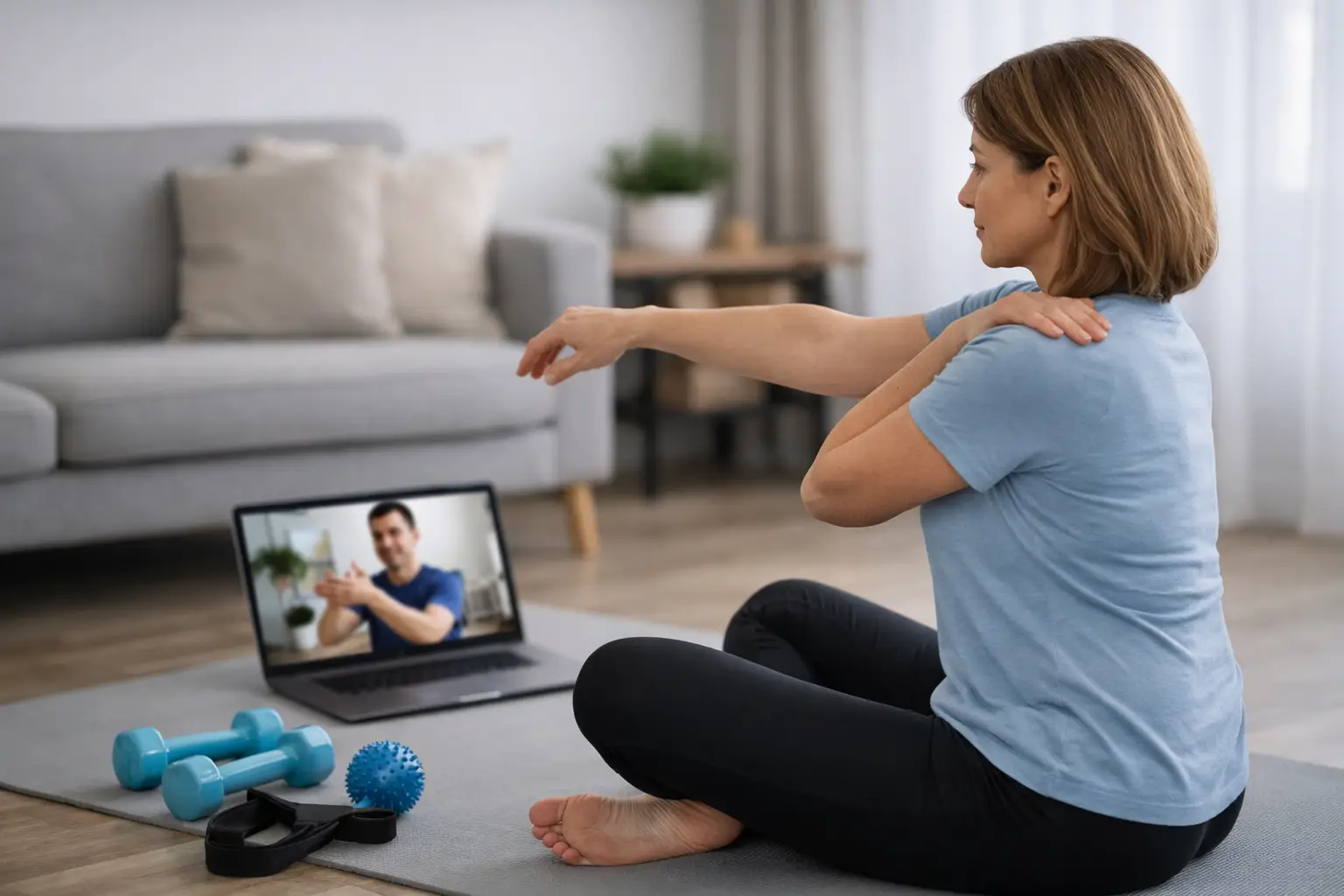
Virtual physiotherapy at home is a one-on-one appointment with a licensed physiotherapist using video. The session usually begins with a detailed discussion about your symptoms, injury history, daily routine, and goals. From there, the therapist watches how you move, asks you to perform simple tests, and looks for patterns that may be contributing to pain or limited function.
This is more useful than many people expect. A physiotherapist can learn a great deal by observing how you stand, walk, bend, reach, squat, or get up from a chair. They can also assess factors that are often missed in a quick in-person visit, such as your desk setup, the way you lift at home, or whether your exercise space is helping or hurting your recovery.
After the assessment, your therapist builds a treatment plan around what they find. That may include stretching, strengthening, balance work, mobility drills, activity modification, and pain management strategies. You are not just told to do exercises and figure them out later. A strong virtual session includes coaching on form, pacing, symptom response, and how to adjust movements if something does not feel right.
Who benefits most from virtual care
Virtual physiotherapy tends to work best for people who need expert guidance, accountability, and a clear plan more than they need hands-on treatment right away. That includes adults with mild to moderate back pain, neck tension, postural strain, joint stiffness, repetitive strain issues, and many overuse injuries. It can also be a good fit for people managing arthritis, recovering from a flare-up, or returning to activity after a minor injury.
It is especially helpful for working professionals who sit for long hours and keep putting care off because the schedule never opens up. Instead of losing more time and letting the problem become more stubborn, they can start with an assessment at home and begin changes immediately.
Older adults can benefit too, particularly when travel is difficult or symptoms make driving uncomfortable. Virtual visits can focus on balance, strength, safe mobility, and home-based routines that support independence. In these cases, treatment happens in the exact environment where daily movement matters most.
Athletes and active adults may also use virtual care effectively for exercise progression, return-to-training guidance, and movement correction. If the issue is straightforward and the person is able to follow instruction well, virtual sessions can keep rehab moving without unnecessary gaps.
Where virtual physiotherapy at home has limits
Virtual care is useful, but it is not magic. Some conditions need physical testing that is more accurate in person. Others benefit from manual therapy, supervised equipment use, or closer hands-on observation. If you have severe pain, major weakness, numbness that is spreading, recent trauma, significant swelling, or symptoms that suggest a more serious condition, an in-person assessment is often the safer choice.
There are also cases where virtual care is helpful at one stage but not another. Someone with acute low back pain may start virtually for education, gentle movement, and reassurance, then move to in-person treatment if symptoms are not improving as expected. Someone recovering from surgery may use a mix of both, depending on the phase of healing and the surgeon’s guidelines.
That is why honest clinical judgment matters. A good provider will not force a virtual format when it is not the best fit. They will tell you if your case calls for in-person care, imaging referral, or a coordinated treatment plan that includes other services.
What makes a virtual session effective
The quality of the provider matters more than the technology. A clear camera and stable internet help, but results come from a thorough assessment, precise exercise selection, and follow-up that adapts as you improve.
The most effective virtual sessions are specific. They do not rely on generic routines pulled from a handout. Your program should reflect your pain pattern, lifestyle, fitness level, and the demands of your job or sport. If your shoulder hurts because of long hours at a laptop, your plan should address more than the shoulder. If your knee pain shows up only when going downhill or after tennis, that context matters.
Your own participation matters too. Virtual physiotherapy at home works best when you are ready to practice the plan between visits and communicate clearly about what you are feeling. That does not mean you need to be perfect. It means consistency, even in small amounts, tends to produce better results than doing a lot one day and nothing for the next week.
Common concerns patients have
One common concern is whether the therapist can really assess pain through a screen. They can, within reason. They cannot replace every aspect of hands-on testing, but they can still evaluate movement quality, symptom behavior, range of motion, tolerance to activity, and functional limitations. For many common musculoskeletal problems, that provides enough information to begin treatment safely and effectively.
Another concern is whether home exercises are enough. Sometimes they are. Sometimes they are the foundation, but not the whole solution. Pain often improves when the right exercises are paired with education, load management, and progression over time. The key is not doing more exercises. It is doing the right ones, at the right intensity, for the right reason.
Patients also worry that virtual care may feel less personal. In practice, many people find the opposite. One-on-one video sessions can feel focused and collaborative, especially when the therapist takes time to explain what is happening and why. You may also feel more comfortable asking questions in your own home, where the barriers to showing your real routine are lower.
How to prepare for a better at-home appointment
A little setup goes a long way. Wear clothing that allows the therapist to see the area involved and how the nearby joints move. Make enough space to stand, sit, and lie down if needed. Keep a sturdy chair, a towel, and any simple exercise tools you already own nearby, but do not worry if you have no equipment. Most early rehab work can be done with body weight and household items.
It also helps to think ahead about your symptoms. Notice what makes them better, what makes them worse, how long they have been going on, and what your goals are. Maybe you want to sit through a workday without stiffness, get back to the gym, carry groceries without pain, or sleep through the night. Those goals shape treatment.
When a hybrid approach is best
For many patients, the strongest option is not virtual or in-person. It is both. A hybrid plan can give you the convenience of home-based follow-up and the added value of hands-on assessment or treatment when needed. That is often ideal for people with recurring pain, more complex injuries, or recovery plans that need periodic re-evaluation.
A multidisciplinary clinic can make this even more useful. If your recovery also involves massage therapy, chiropractic care, acupuncture, or other support, your treatment can be coordinated instead of fragmented. At Active Rehab Center, that kind of personalized planning is part of helping patients move from pain relief to real recovery.
Virtual care should not be seen as a lesser option. It is one more way to remove delays, start treatment early, and keep your progress going when life is busy. If you have been waiting for the right time to get help, the right time may simply be the first appointment you can actually keep.