
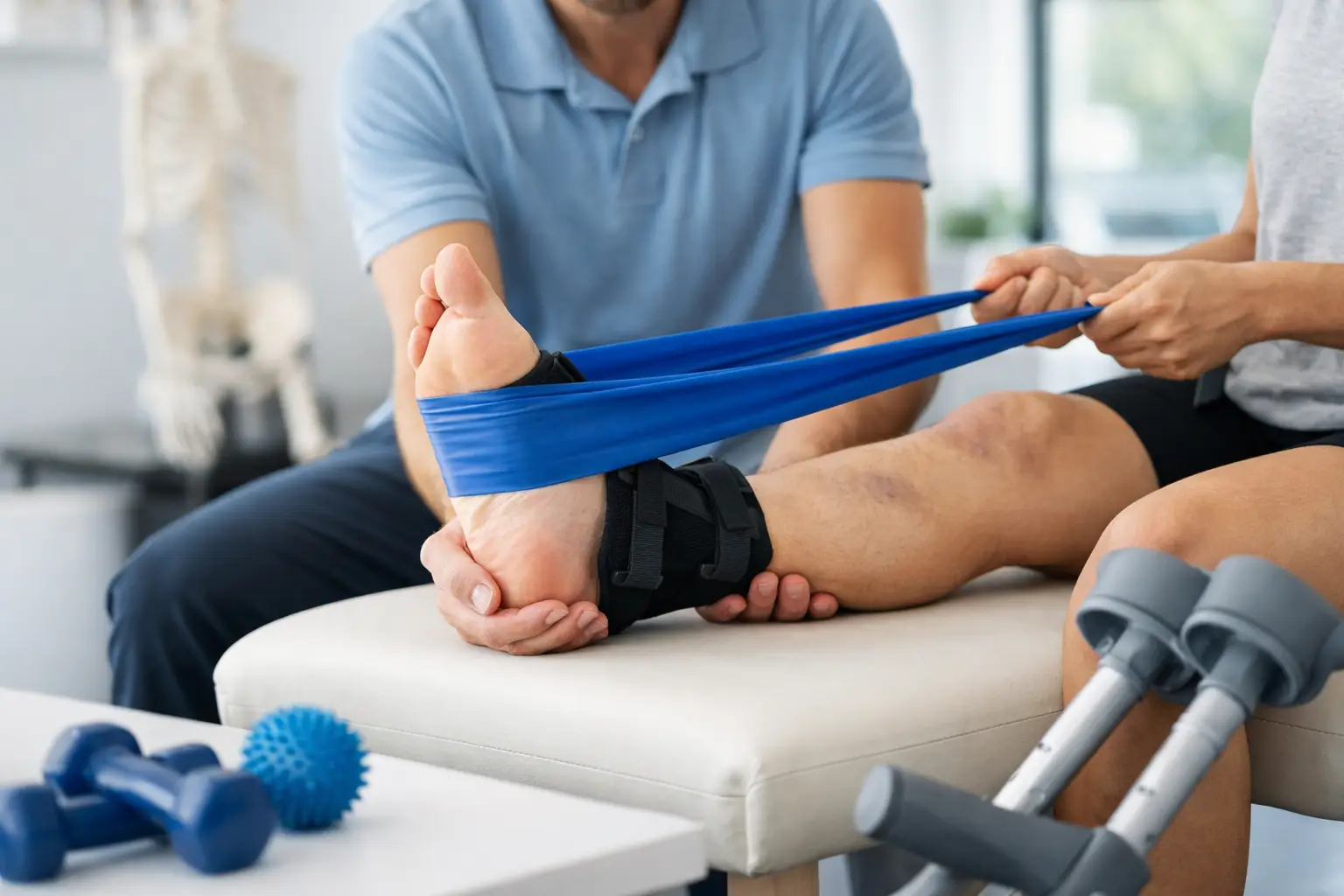
The cast is off, or your surgeon has cleared you to start moving more, yet the ankle may still feel stiff, weak, swollen, and unfamiliar. That gap between bone healing and feeling ready to walk normally is where physiotherapy after ankle fracture can make a meaningful difference. Recovery is not just about getting back on your feet. It is about rebuilding safe movement, confidence, and the ability to return to the parts of daily life that matter to you.
An ankle fracture can affect more than the bone itself. Time in a boot, cast, or non-weight-bearing position can reduce joint motion, weaken the calf and foot muscles, and change how you walk. A personalized rehabilitation plan helps address those changes at the right pace.
Why ankle fracture rehabilitation matters
Your fracture needs enough stability to heal, which is why your orthopedic provider’s instructions always come first. But once movement is appropriate, avoiding rehabilitation for too long can leave you with ongoing stiffness, limping, poor balance, or discomfort when you return to activity.
Physiotherapy focuses on the tissues and movement patterns surrounding the healing fracture. A licensed physiotherapist assesses your ankle motion, swelling, strength, walking pattern, balance, footwear needs, and activity goals. Treatment is then adjusted to your stage of healing, whether you are recovering from a simple stable fracture, a fracture that required surgery, or an injury involving ligament damage as well.
The goal is not to push through pain or rush weight bearing. It is to introduce the right amount of movement and loading so your ankle can gradually tolerate everyday demands.
When to begin physiotherapy after ankle fracture
The right starting point depends on the type and location of the fracture, whether surgery was needed, the stability of the ankle, and your follow-up imaging. Some people begin with gentle exercises while wearing a boot. Others need to wait until their surgeon confirms that the bone is healing well enough for ankle motion or weight bearing.
This is why online timelines can be misleading. One person may be cleared to bear weight after several weeks, while another may need a longer protected period. Diabetes, circulation concerns, osteoporosis, smoking, previous ankle injuries, and the demands of your work can also affect recovery.
Once you are referred or cleared, early physiotherapy may include education on using crutches or a walker safely, managing swelling, maintaining strength in the knee and hip, and protecting the ankle during daily activities. Your therapist will work within your medical restrictions rather than treating the fracture as though every ankle follows the same schedule.
A note about pain and swelling
Some soreness, stiffness, and swelling are common as you begin moving and walking more. Symptoms often increase later in the day, especially after standing or returning to work. This does not automatically mean you have caused harm.
However, sharp or worsening pain, a sudden loss of function, numbness, a cold or discolored foot, calf pain, shortness of breath, fever, or drainage from a surgical incision should be assessed promptly. Contact your surgeon or seek urgent medical care when symptoms feel concerning.
What physiotherapy after ankle fracture usually includes
A good rehabilitation plan progresses from protection to mobility, strength, balance, and return to real-life activities. The exact exercises change over time, but each phase should have a clear purpose.
Restoring ankle movement
After immobilization, the ankle may struggle to point down, pull up, turn in, or turn out. Limited motion can make stairs, squatting, and walking downhill difficult. Your physiotherapist may use gentle hands-on techniques, guided active movement, and home exercises to restore mobility without overloading the healing area.
Regaining the ability to bring the knee forward over the foot is especially useful for walking and climbing stairs. That said, more range of motion is not always better immediately after injury. The amount and direction of movement must respect the fracture and any surgical repair.
Rebuilding strength and walking tolerance
The calf, foot, hip, and leg muscles often lose strength quickly when you cannot fully use the leg. Early exercises may be simple and non-weight-bearing. As clearance and tolerance improve, rehabilitation can progress to standing calf raises, resistance work, step exercises, and controlled single-leg tasks.
Your gait matters, too. It is common to keep weight off the recovering side even after you are medically cleared to walk. A physiotherapist can help you transition from crutches or a boot, correct a persistent limp, and build walking distance gradually. Moving too fast can flare symptoms, but avoiding load altogether can delay strength gains. The best progression usually sits between those extremes.
Improving balance and preventing another injury
An ankle fracture can affect proprioception, which is your body’s awareness of where the joint is in space. This can leave you feeling unsteady on uneven ground, when turning quickly, or while carrying groceries up stairs.
Balance training may begin with supported weight shifts and progress to single-leg standing, reaching tasks, step-down control, and more demanding activity-specific drills. For an athlete, this may eventually include hopping, cutting, and landing mechanics. For an older adult, the priority may be safer walking, stair confidence, and reducing fall risk.
Managing swelling, stiffness, and scar sensitivity
Swelling can persist for months after an ankle fracture, particularly after surgery or long periods on your feet. Your therapist may recommend elevation, ankle pumping, compression when medically appropriate, pacing strategies, and changes to footwear. Hands-on treatment may help with joint stiffness or soft-tissue tightness when it is suitable for your stage of healing.
If you had surgery, scar mobility and sensitivity can also be addressed after the incision is fully healed and your surgical team has given clearance. Gentle treatment can make socks, shoes, and movement more comfortable.
Your home program is part of treatment
Clinic visits provide assessment, progression, and hands-on support, but the work between appointments is what builds consistent change. Your home program should be realistic enough to do regularly. Ten focused minutes done as prescribed is often more helpful than an ambitious routine that is abandoned after two days.
Follow the dosage given by your physiotherapist. Exercises may need to be reduced after a demanding workday or progressed when they become easy. Keep track of how your ankle responds over the next 24 hours, not only during the exercise itself. Mild discomfort can be expected, while significant swelling or lingering pain is useful feedback that the program may need adjustment.
Supportive shoes can also make the transition back to walking easier. Avoid switching immediately from a protective boot to unsupportive footwear unless your provider has specifically advised it. Your therapist can help you decide when a brace, supportive shoe, or temporary orthotic may be useful.
Returning to work, exercise, and sport
Returning to activity is about capacity, not simply the date on the calendar. A desk-based job may be possible before you can tolerate a full shift standing, walking, lifting, or climbing stairs. If your job is physically demanding, a phased return may help you rebuild tolerance while protecting your recovery.
For running, court sports, hiking, or fitness classes, you should be able to walk without a significant limp and manage daily tasks with good control before adding impact. Your physiotherapist can test strength, ankle motion, balance, and task-specific movement to identify what still needs attention.
There can be frustration in this phase because the ankle may feel fine during one activity but swell later. That is not failure. It is information that helps guide the next step. Consistent, progressive rehabilitation is usually more effective than testing the ankle with a sudden long walk, intense workout, or weekend game.
Personalized support for ankle fracture recovery
A fracture recovery plan should reflect your medical restrictions and your life. Someone who needs to stand at work has different needs from someone training for a race or managing stairs at home. At Active Rehab Centre, licensed physiotherapists can provide one-on-one assessment and practical rehabilitation designed around your healing stage and goals.
If transportation, work, or mobility limits make appointments difficult, ask whether at-home or virtual physiotherapy options are appropriate for your situation. Direct billing may also reduce one barrier to getting started with care.
Your ankle does not need to feel perfect before you begin rebuilding trust in it. With medical clearance, a measured plan, and consistent support, each comfortable step can become evidence that recovery is moving forward.