A sharp pain from the low back into the buttock or leg can make ordinary routines feel uncertain. With sciatica vs piriformis syndrome, the symptoms can overlap enough that it is tempting to self-diagnose. But the source of the irritation matters. It influences which movements to modify, which treatments may help, and when you need prompt medical assessment.
Sciatica is a description of pain related to irritation or compression of the sciatic nerve or its nerve roots. Piriformis syndrome refers to irritation of the sciatic nerve around a small buttock muscle called the piriformis. One can resemble the other, yet they do not always respond to the same approach.
Sciatica vs Piriformis Syndrome: The Main Difference
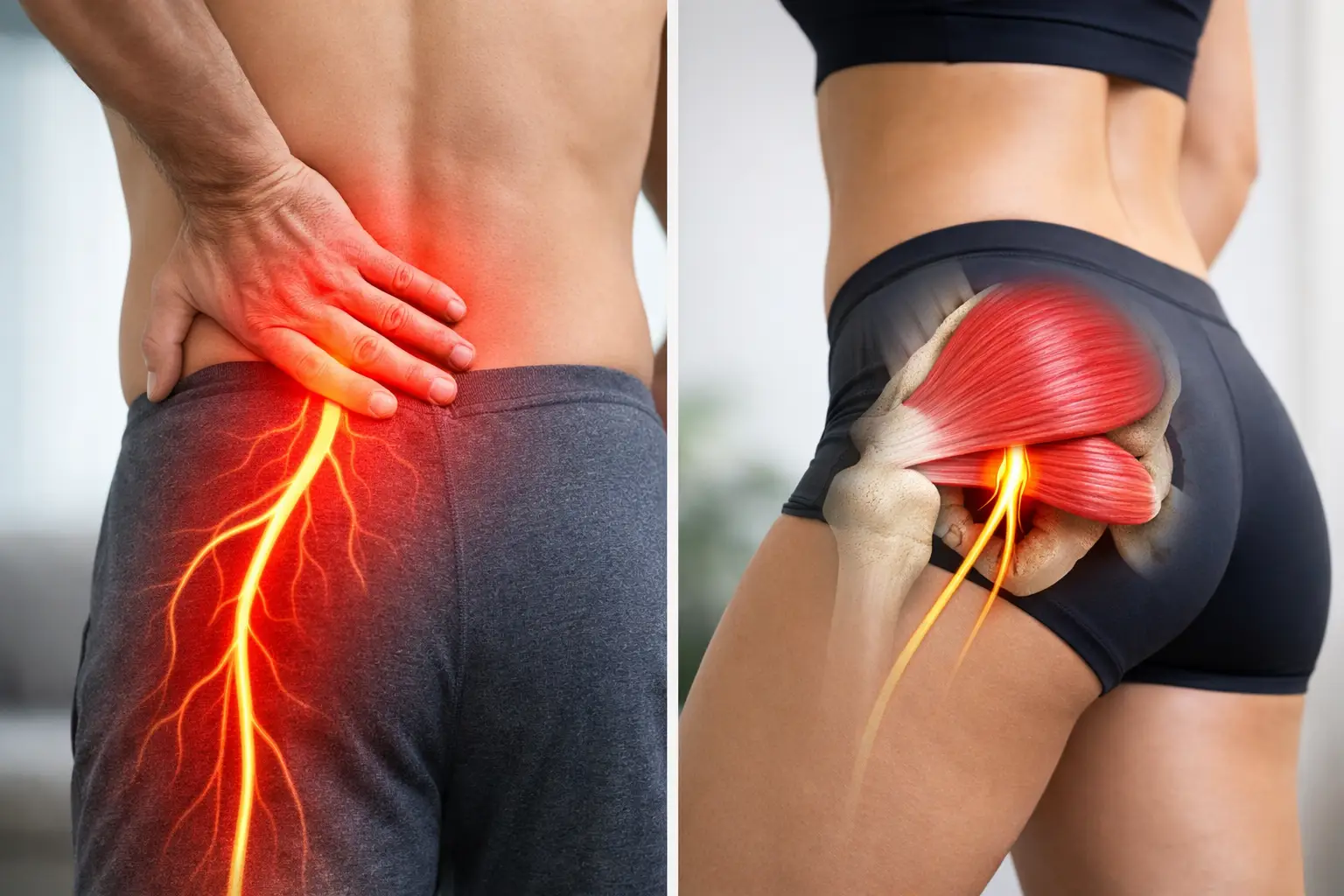
The sciatic nerve is the largest nerve in the body. It begins from nerve roots in the lower spine, travels through the buttock, and runs down the back of each leg. “Sciatica” describes symptoms along this pathway, commonly on one side. The underlying cause is often in the lower back, such as a disc bulge or herniation, spinal narrowing, arthritis-related changes, or another condition affecting a nerve root.
The piriformis is a deep muscle in the buttock that helps rotate and stabilize the hip. In many people, the sciatic nerve passes beneath it. If the muscle becomes tight, irritated, or spasms, it may contribute to pain in the buttock and possibly irritation around the nerve. This pattern is often called piriformis syndrome.
The distinction is not always clear-cut. Piriformis syndrome is less common than lumbar nerve-root irritation and can be difficult to confirm with a single test. Hip problems, sacroiliac joint pain, hamstring injuries, and other conditions may also create similar symptoms. A proper assessment looks at the full picture rather than relying on where the pain is felt alone.
Symptoms That Can Help Tell Them Apart
Both conditions can cause aching, burning, tingling, or shooting pain through the buttock and leg. The pattern of symptoms, however, can offer useful clues.
Signs more consistent with sciatica from the low back
Sciatica related to the lower spine often begins with low back pain or stiffness, although back pain is not present in every case. Pain may travel from the buttock into the back or side of the thigh, calf, foot, or toes. Numbness, tingling, or weakness in the leg can occur when a nerve root is more significantly affected.
Symptoms may worsen with coughing, sneezing, bending forward, prolonged sitting, or movements that load the lower back. Some people notice that one particular position, such as standing upright or bending backward, also triggers their pain. A clinician may reproduce familiar symptoms during a leg-raise test or while assessing spinal movement and reflexes.
Signs more consistent with piriformis-related pain
Piriformis syndrome more often creates a deep, tender ache in the center or outer portion of the buttock. Sitting for a long drive, working at a desk, climbing stairs, running, or crossing the legs may aggravate it. The pain can refer down the back of the thigh, but it may not travel as far into the foot as classic nerve-root sciatica.
There may be local tenderness around the piriformis area, and hip movements such as rotating the knee outward or bringing it across the body can reproduce symptoms. This does not prove the diagnosis on its own. It simply gives the practitioner more information about whether the hip and deep gluteal muscles are contributing.
Why the Right Assessment Matters
Stretching can be helpful for one person and aggravating for another. For example, aggressive hamstring or piriformis stretching may increase symptoms if a sensitive nerve is being pulled or compressed. Likewise, rest alone may calm a flare temporarily but does not address weakness, reduced mobility, poor lifting mechanics, or training errors that continue to load the area.
A licensed rehabilitation professional can assess your lower back, hip range of motion, muscle strength, walking pattern, sensation, reflexes, and daily activities. They will ask how symptoms started, whether the pain changes throughout the day, and which positions make it better or worse. This evaluation helps identify whether the primary concern appears to be spinal, hip-related, muscular, or a combination.
Imaging is not required for every episode of leg pain. Many people improve with conservative care, and an MRI or X-ray does not always change early treatment. Imaging or referral may be appropriate if symptoms are severe, are not improving as expected, or suggest a more serious problem.
Treatment Depends on the Driver of Your Pain
Most uncomplicated cases of sciatica or piriformis-related pain benefit from a personalized, active plan. The goal is not simply to chase pain from one appointment to the next. It is to reduce irritation while gradually restoring comfortable movement, strength, and confidence in everyday activities.
For sciatica originating in the lower back, treatment may include guided movements that reduce leg symptoms, gentle nerve mobility exercises, core and hip strengthening, manual therapy when appropriate, and education on sitting, lifting, sleeping, and returning to work or exercise. The best direction of exercise varies. Some people feel better with bending-based movements, while others respond better to extension or a neutral-spine approach.
For suspected piriformis syndrome, a plan may focus more heavily on hip mobility, gluteal strength, pelvic control, and gradual changes to sitting or running habits. Soft tissue treatment or massage may help reduce surrounding muscle tension for some people, but it works best alongside movement-based rehabilitation. If repetitive training, a recent increase in mileage, or prolonged sitting is part of the problem, those factors need practical adjustments too.
At Active Rehab Centre, a multidisciplinary assessment can help coordinate physiotherapy, chiropractic care, massage therapy, acupuncture, and other appropriate services around your individual recovery plan. The right combination depends on your symptoms, health history, activity goals, and response to care.
What you can do while waiting for an appointment
Avoid testing the pain repeatedly by forcing deep stretches, heavy lifting, or long periods in the position that clearly aggravates you. Instead, keep moving within a tolerable range. Short, frequent walks are often easier on an irritated back or nerve than spending the whole day in bed or on the couch.
Use comfortable position changes throughout the day. If sitting increases symptoms, stand and walk briefly every 20 to 30 minutes when possible. If walking is painful, reduce the distance and discuss it with a clinician rather than pushing through worsening leg pain. Heat or ice may provide short-term comfort, depending on what feels better for you.
It is also useful to notice patterns before your appointment: where the pain begins, how far it travels, whether numbness is present, and which activities reliably trigger or relieve symptoms. These details can make the assessment more efficient and specific.
When Sciatic Pain Needs Urgent Medical Care
Most episodes do not require emergency care, but certain symptoms should never be ignored. Seek urgent medical assessment if you develop new bowel or bladder control problems, numbness in the groin or saddle area, rapidly worsening leg weakness, severe pain after a significant fall or accident, fever with back pain, or unexplained weight loss.
Prompt evaluation is also sensible if pain is persistent, progressively worsening, causing repeated falls, or preventing you from managing normal daily activities. If you have a history of cancer, infection risk, osteoporosis, or long-term steroid use, tell your health care provider.
Moving Forward With More Confidence
Whether the source is a lower-back nerve root, the piriformis region, or another structure entirely, pain down the leg deserves more than a guess based on an online symptom chart. A clear assessment can replace uncertainty with a plan that respects your current limits while helping you return to work, walking, training, and the activities that matter to you.