A sore back can make bedtime feel like a guessing game. You settle in, find a position that seems comfortable, then wake up a few hours later with stiffness, sharp pain, or a familiar ache down your hip or leg. The best sleeping positions for back pain are usually the ones that keep your spine supported in a neutral, relaxed alignment – but the right setup depends on where your pain is coming from.
For some people, a pillow between the knees makes a dramatic difference. For others, a small pillow under the knees or lower back is more useful. The goal is not to force your body into one “perfect” posture. It is to reduce strain on irritated muscles, joints, discs, and nerves so your body has a better chance to recover overnight.
Best Sleeping Positions for Back Pain
Side sleeping with a pillow between your knees
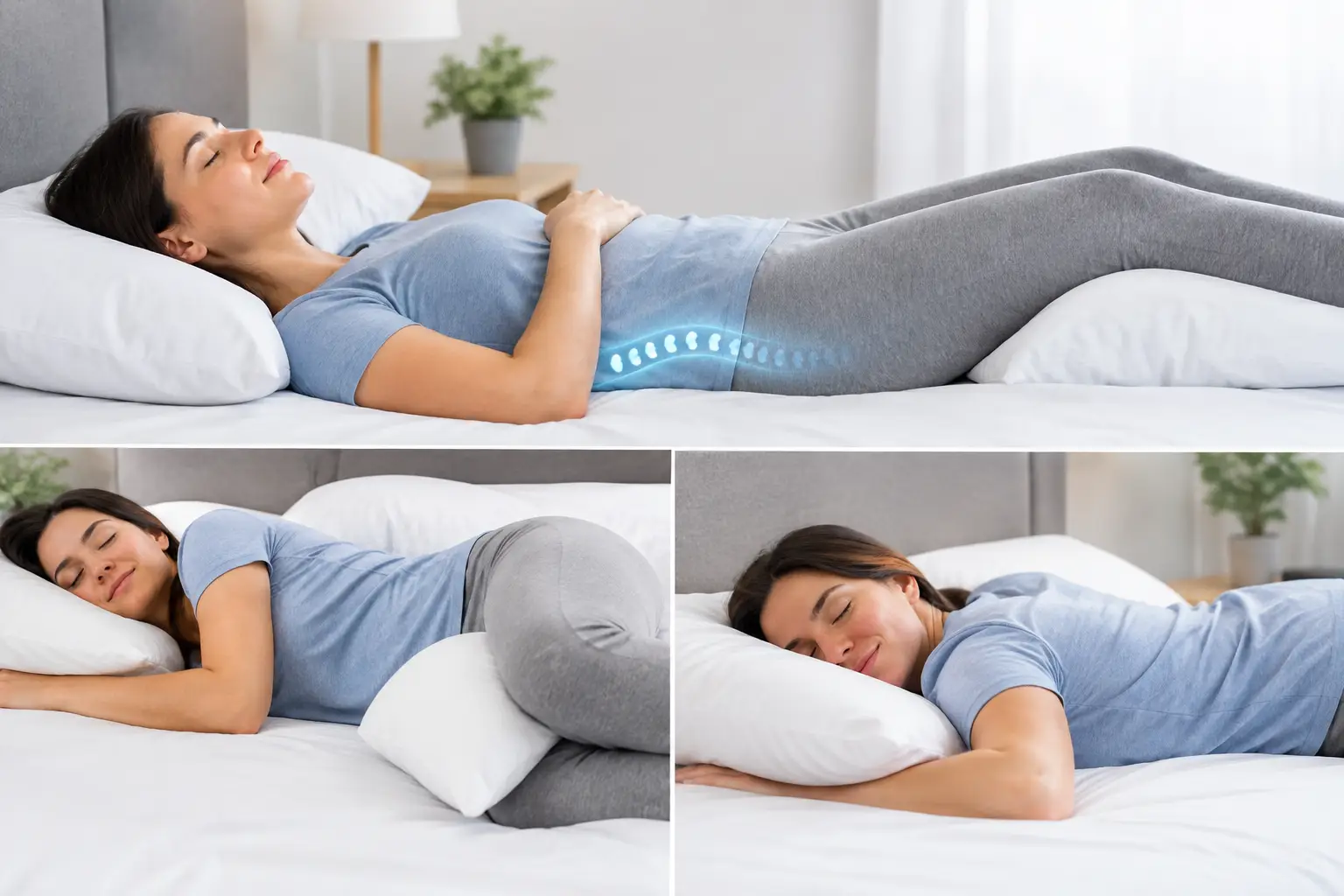
Side sleeping is often one of the most comfortable options for people with low back pain, sciatica, hip discomfort, or pregnancy-related back strain. Lie on your side with your knees slightly bent, then place a firm pillow between your knees and thighs. This helps prevent the top leg from dropping forward and twisting the pelvis and lower back.
Your head pillow matters just as much. It should fill the space between your shoulder and neck without pushing your head up too high or letting it sink down. When your neck, ribs, and hips are roughly in line, your back does not have to work as hard to stabilize you through the night.
If there is a gap between your waist and the mattress, a small rolled towel can provide gentle support. Avoid curling tightly into a ball if it increases pain or leaves you feeling stiff in the morning. A relaxed, slightly bent position is usually more comfortable than a deep fetal position.
Back sleeping with support under the knees
Sleeping on your back distributes weight more evenly across the mattress and may reduce pressure on the hips and shoulders. However, lying flat can increase the curve in your lower back, which can aggravate some types of low back pain.
Try placing a pillow under both knees. This slightly tilts the pelvis and can take tension off the lower back. A thin towel under the small of the back may also feel supportive, but it should not create a large arch. The aim is comfort, not forcing your spine flat.
Back sleeping can be especially helpful when side sleeping causes shoulder pain or when you are recovering from an injury that makes turning difficult. If you snore heavily or have sleep apnea, however, speak with a healthcare professional before making back sleeping your regular position, since it can worsen breathing problems for some people.
A reclined position for certain conditions
Some people with spinal stenosis, degenerative disc discomfort, or pain that worsens when standing upright find relief in a gently reclined position. This may mean an adjustable bed, a supportive wedge pillow, or a recliner that keeps the knees slightly elevated.
This position can reduce the feeling of compression in the lower back for some patients. It is not the best long-term answer for everyone, particularly if the chair forces your neck forward or leaves you twisted to one side. If you wake with more neck pain, numbness, or hip soreness, the setup likely needs adjustment.
Positions That May Make Pain Worse
Stomach sleeping is not automatically harmful, but it is often the least back-friendly choice. It can rotate the neck for hours and allow the abdomen and pelvis to sink into the mattress, increasing strain on the lower back. If stomach sleeping is the only way you can fall asleep, place a thin pillow beneath your pelvis and lower abdomen, and use a very thin head pillow or no pillow if that is comfortable for your neck.
The bigger issue is not always the position itself. It is staying twisted, unsupported, or compressed for too long. A person who starts on their side may roll onto their stomach during sleep, while another may wake repeatedly because a poorly placed pillow is creating pressure. Focus on improving the position in which you fall asleep and spend most of the night rather than trying to control every movement.
Match Your Sleep Position to Your Symptoms
Back pain is not one condition. A dull ache after a long day at a desk calls for a different approach than pain that travels down the leg, pain after a lifting injury, or stiffness linked to arthritis.
If pain runs from the low back into the buttock or leg, side sleeping with a pillow between the knees or back sleeping with knees elevated can reduce tension for many people. If you have upper back or shoulder discomfort, side sleeping may require a more supportive head pillow and a pillow to hug in front of your chest. Hugging a pillow supports the top arm and can keep the shoulder from rolling inward.
For morning stiffness that improves after moving around, look at your mattress and pillow as well as your position. A mattress that sags at the hips can leave the low back unsupported. On the other hand, an overly firm mattress may create pressure at the shoulders and hips, causing you to tense through the night. Medium-firm support works well for many adults, but body size, sleep habits, and medical conditions all affect what feels right.
Small Changes That Make a Real Difference
Your bedtime routine can either calm a sore back or carry the day’s tension into bed. Gentle movement before sleep often helps more than complete stillness. A short walk, easy hip and back mobility exercises, or a warm shower can reduce muscle guarding. Avoid aggressive stretching when pain is sharp or newly injured, since forcing range of motion can make symptoms worse.
How you get into bed matters, too. Instead of twisting at the waist, sit on the edge of the bed, lower yourself onto your side with your arms, then bring your legs up together. To get out of bed, reverse the movement. This simple log-roll technique can be useful during flare-ups, after an injury, or when back pain is severe in the morning.
Also consider your daytime habits. Long periods of sitting, repetitive lifting, poor workstation setup, and reduced activity can all contribute to nighttime discomfort. Sleep support is valuable, but it works best alongside a plan to improve strength, mobility, posture, and movement tolerance during the day.
When Back Pain Needs Professional Care
A few difficult nights after yard work or an awkward lift may settle with rest, gentle movement, and a better pillow arrangement. Pain that continues, keeps returning, or limits work, walking, exercise, or sleep deserves a closer assessment. A licensed provider can identify whether your symptoms are more likely related to muscle strain, joint irritation, nerve involvement, disc issues, or another concern.
Seek urgent medical attention for back pain with new bowel or bladder changes, numbness around the groin, significant leg weakness, fever, unexplained weight loss, or pain after a serious fall or accident. These symptoms need prompt evaluation.
At Active Rehab Centre, personalized physiotherapy, chiropractic care, massage therapy, acupuncture, and guided rehabilitation can be coordinated around your symptoms and goals. The right plan may include hands-on treatment, targeted exercise, practical sleep modifications, and strategies that help you move with more confidence during the day.
A supportive sleep position will not solve every cause of back pain, but it can make the night less frustrating and give your body a better environment to heal. Start with one adjustment for several nights, notice how you feel on waking, and seek care if pain continues to interrupt the rest you need.