An ankle sprain can seem minor until walking to the kitchen, getting down the stairs, or standing through a work shift becomes painful. Effective rehab after ankle sprain is not just about waiting for swelling to disappear. It is about restoring the movement, strength, balance, and confidence that help prevent the same ankle from rolling again.
Many people return to activity once they can tolerate the pain, but pain relief alone does not mean the ankle is ready for running, sport, uneven ground, or a long day on their feet. A guided recovery plan helps you progress at the right pace while addressing the reasons ankle sprains often become a recurring problem.
Why an Ankle Sprain Needs More Than Rest
Most ankle sprains occur when the foot rolls inward and stretches or tears the ligaments on the outside of the ankle. The immediate response is often swelling, tenderness, bruising, and difficulty putting weight through the foot. Rest, ice or other comfort measures, compression, and elevation can be useful early on, but prolonged rest may leave the ankle stiff and weak.
The ligaments need time to heal, yet the surrounding muscles and nervous system also need retraining. After an injury, people often unconsciously avoid loading the painful side. This can change the way they walk, make the calf and foot muscles less effective, and reduce the ankle’s ability to react quickly when the ground is uneven.
That is why two people with a similar-looking sprain can recover very differently. A mild sprain may improve substantially within one to two weeks, while a more significant injury can take several weeks or longer. Recovery also depends on your age, activity demands, previous injuries, swelling, and whether there is damage beyond the ligaments.
When to Get an Ankle Sprain Assessed
A professional assessment is particularly helpful when pain is severe, progress has stalled, or you need to return to a physically demanding job or sport. A physiotherapist can examine walking mechanics, ankle motion, strength, balance, and the structures around the joint to create a plan that matches your goals.
Seek prompt medical assessment if you cannot take four steps, have significant tenderness directly over the ankle or foot bones, notice deformity, experience numbness or coldness in the foot, or have worsening pain and swelling. These signs may indicate a fracture or another injury that needs imaging or medical care. It is also worth being assessed if the ankle keeps giving way, even after the initial pain has improved.
Rehab After Ankle Sprain: The Right Progression
Rehabilitation is usually most effective when it follows the ankle’s tolerance rather than a strict calendar. Some discomfort during exercise can be normal, especially as stiffness improves. Sharp pain, a major increase in swelling, or soreness that remains worse the next day usually means the activity was too much, too soon.
Early phase: protect the injury and restore gentle motion
During the first few days, the goal is to reduce irritation without becoming completely inactive. If walking is painful, a brace, supportive shoe, or mobility aid may be appropriate based on a clinician’s advice. Avoid forcing the ankle into painful stretches or trying to “walk it off” when you are limping significantly.
Gentle ankle movement can often begin early if it is comfortable. Slowly pointing and flexing the foot, making controlled ankle circles, and tracing the alphabet with the toes can help maintain motion. The movement should feel easy and controlled, not aggressive. Elevating the ankle after activity may help manage swelling, while compression can provide support for some people.
Middle phase: rebuild strength and normal walking
As pain and swelling settle, the focus shifts to walking without a limp and rebuilding strength. The calf muscles, small muscles around the ankle, and muscles higher up the leg all contribute to stability. A weak hip or poor single-leg control can place more stress on the ankle when you climb stairs, change direction, or land from a jump.
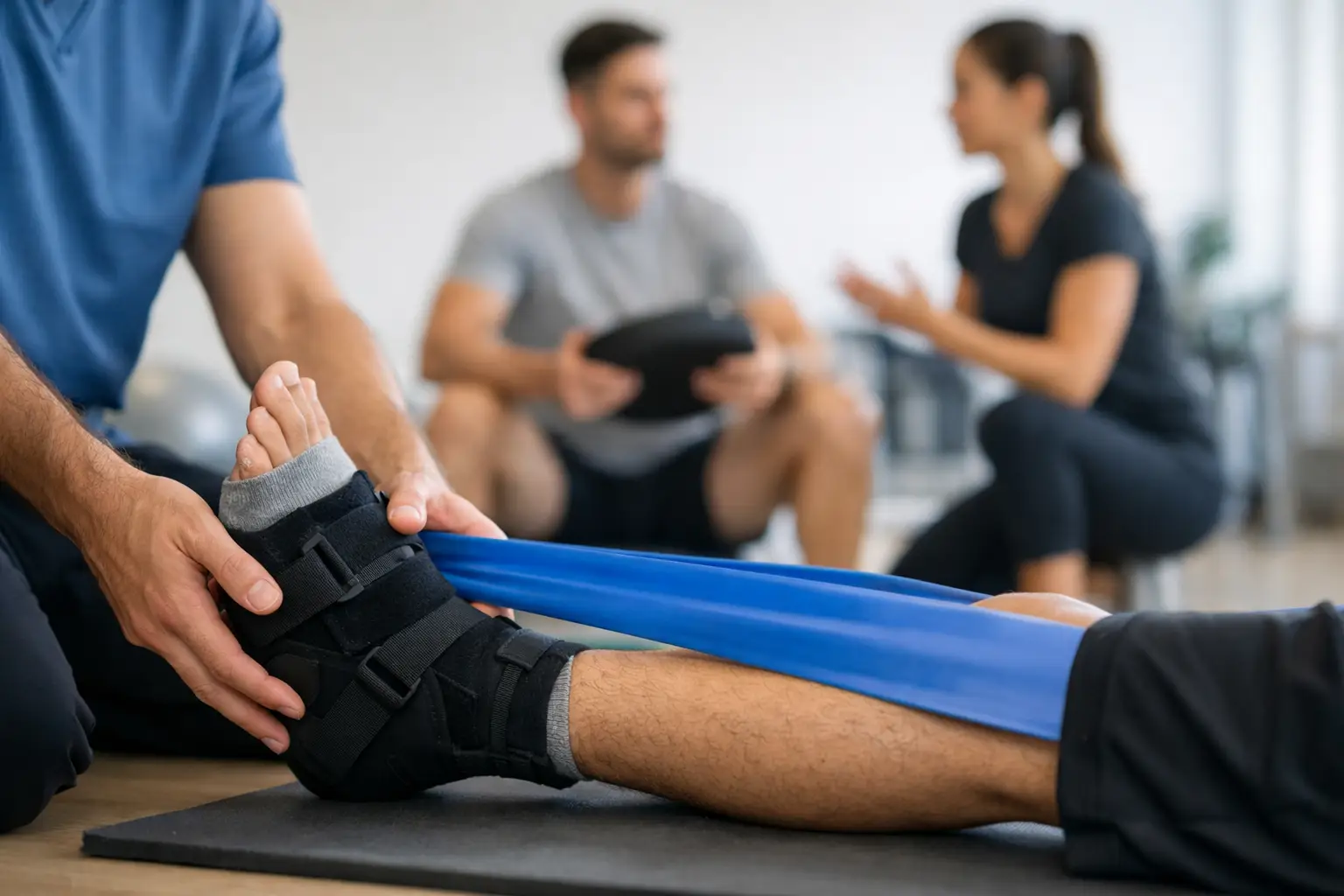
A physiotherapist may introduce resistance-band exercises that move the foot up, down, inward, and outward. Controlled heel raises are another common progression. Start with both feet if needed, then move toward single-leg heel raises as your control improves. The quality of each repetition matters more than doing a high number quickly.
At this stage, supportive footwear can make a meaningful difference. Shoes with a stable base are often more helpful than worn-out runners, loose sandals, or footwear that allows the foot to slide. If your job requires prolonged standing or walking, your plan may also include gradual exposure to those demands rather than jumping back into a full shift without preparation.
Late phase: train balance, control, and confidence
Ankle ligaments contain receptors that help your body sense joint position. After a sprain, that system may be less accurate. This is one reason a person can feel physically stronger but still be vulnerable to another awkward step.
Balance training is a central part of rehabilitation. It may begin with standing on the injured leg near a wall or counter for support. From there, you can progress by reducing hand support, closing your eyes only when appropriate, reaching in different directions, or standing on a less stable surface. The right challenge should make you work without making the ankle feel unsafe.
Single-leg squats, step-downs, and controlled lunges may be added to improve how the ankle, knee, and hip work together. For runners and athletes, the final stages often include hopping, landing, cutting, and sport-specific drills. These are not extras. They help prepare the ankle for the fast, unpredictable movements that cause many repeat sprains.
Return to sport, exercise, or demanding work
Returning safely is about capacity, not simply elapsed time. Before higher-impact activity, you should generally be able to walk briskly without pain or limping, move the ankle close to the same range as the other side, and perform strength and balance tasks with good control.
For a return to running or court sports, your clinician may compare single-leg heel raises, hopping ability, landing quality, and side-to-side control. A brace or athletic taping may provide additional support during the transition back to sport, especially for people with a history of repeated sprains. However, external support works best alongside strengthening and balance work, not as a replacement for it.
Common Mistakes That Slow Recovery
The most common mistake is doing too little for too long. Protecting a painful ankle is sensible, but avoiding all movement for weeks can contribute to stiffness, weakness, and fear of loading the leg. The opposite mistake is returning to running, jumping, or long walks as soon as the swelling looks better.
Another problem is treating only the sore spot. The ankle may hurt on the outside, but recovery can be affected by calf tightness, reduced foot strength, poor hip control, or an altered walking pattern. A complete plan looks beyond the injured ligament.
Finally, do not ignore repeated ankle sprains. Chronic ankle instability can make everyday activities feel uncertain and may lead to ongoing discomfort. Persistent symptoms deserve more than another round of rest.
How Hands-On Care Can Support Recovery
A personalized rehabilitation plan may include manual therapy to address joint stiffness and soft-tissue restriction, targeted therapeutic exercise, and practical guidance for managing activity at home. Depending on your needs, care can also include massage therapy for surrounding muscle tension or coordinated support from other licensed professionals.
At Active Rehab Centre, rehabilitation is designed around your injury, daily responsibilities, and return-to-activity goals. Whether you are recovering from a weekend injury, preparing to get back to work, or trying to avoid another season on the sidelines, one-on-one care can help turn a painful setback into a more confident return to movement.
Your ankle does not need to feel perfect before you begin moving again, but it does need a thoughtful progression. Start with what you can do well today, build from there, and give your body the support it needs to trust that foot again.